Brand Voice
Resident: Anatomy of a Brand Voice Guide
Brand VoiceContent Strategy
Brief
When I started at Resident, none of its four sleep brands had a defined voice. Every team was making tone calls on instinct, and any decision that actually required brand judgment came back to one person, one request at a time. I needed a system other people could use without me in the room — something that's become even more crucial as we've expanded to six unique sleep brands.
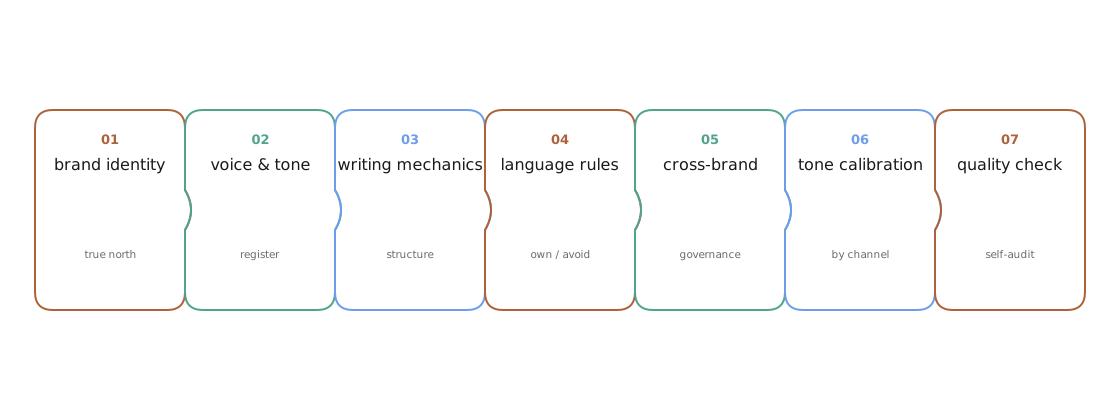
1. Brand Identity
This section answers three questions before a single tone rule gets written: who is this brand for, where does it sit next to its competitors, and what the brand is known for. The persona piece matters most: an image of a specific kind of person, described in enough detail that any writer can picture them and ask "would this person actually say this?" Everything downstream has to trace back to this section — it's our true north.
2. Voice & Tone
Once we've dialed in the identity, it's time to flesh out the voice, tone, and personality. How casual or formal the brand is, how serious, or professional, or exclusive. This is also where we dial in certain rules that help copy feel human, speaking to AI models directly to describe exactly when it's okay to use an em dash. This section is filled with examples, good and bad, to help exemplify these rules.
3. Writing Mechanics
A more formal layer of this document: sentence structure, preferred tenses, specific word counts and copy rules.
4. Language Rules
Every brand has words it owns and words it avoids, and this section makes both explicit. A short list of signature phrases the brand can lean on, and a list of words that are off-limits, with the reasoning behind each one. This is what makes a guide something a reviewer can actually check copy against.
5. Cross-Brand Governance
For a company running multiple brands, this section conveys how they relate: what's shared, what has to stay separate, and how material from one brand gets handled if it's ever adapted for another. Skip this, and voice drift between brands happens quietly, brand by brand, until nothing sounds distinct anymore. With my teammates, this has been pointed to as one of the most helpful sections.
6. Tone Calibration by Channel
The same brand voice can't sound identical on a product page, a blog post, and an email. This section sets how formality and energy shift by channel, so the guide flexes with a real content operation instead of becoming too rigid to use.
7. Universal Quality Check
A short, scannable checklist at the end — the fastest way for a writer to self-audit before publishing, without re-reading the whole document every time.